How to clean an oven safely, and when soaking is not enough
Most ovens need more contact time, not a stronger chemical. The coating, heating elements and door construction decide what is safe.
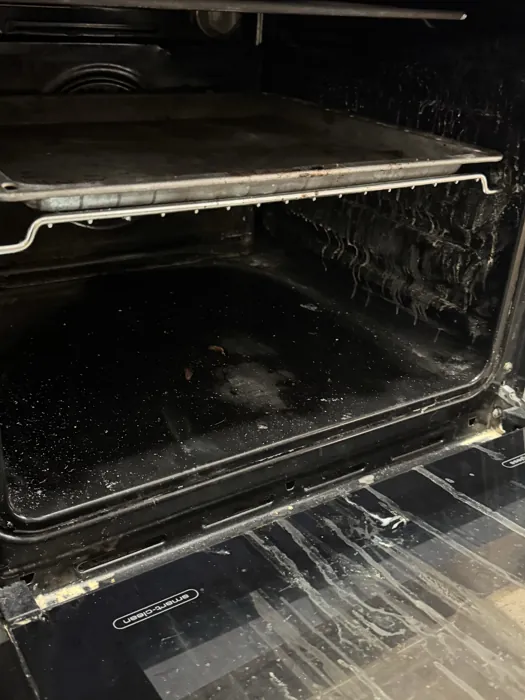
Identify the oven before choosing a product
Switch it off, let it cool completely and check the manual. Pyrolytic, catalytic and conventional enamel interiors do not tolerate the same methods. A chemical suitable for plain enamel may damage a self-cleaning liner.
Remove racks and trays, but do not dismantle fan covers, heating elements or door glass unless the manufacturer allows it. Keep large amounts of water away from vents and electrical connections.
A practical order for baked-on grease
- Remove loose crumbs with a soft brush or vacuum.
- Soak removable racks separately in warm water and washing-up liquid.
- Test a manufacturer-approved degreaser on a hidden area and follow its contact time and ventilation instructions.
- Work from top to bottom with a soft non-scratch pad. Do not soak or pull the door seal.
- Wipe repeatedly with a clean damp cloth, then leave the door open until dry. Never heat chemical residue.
Do not mix cleaning products
Never combine chlorine or bleach products with acids, vinegar or another cleaner. Mixing can create dangerous gas and damage the surface. Baking soda is a mild abrasive and odour absorber, not a universal degreaser. Vinegar is more useful for mineral scale than thick polymerised fat.
If a method only works with hard scraping, stop. Scratches to enamel, glass and printed controls are permanent.
Grease between the door panes needs model-specific access
Many oven doors contain several sheets of glass. Dirt between them cannot be wiped from outside. Some models permit removal; others require service instructions. Glass can crack if screws, spacers or seals return in the wrong position.
CLB charges 8,000 Ft for the oven interior and 15,000 Ft when safe dismantling and reassembly of the door glass is included. We confirm the task from photographs and the model number.
If the whole kitchen needs attention, include the oven in a deep cleaning visit in Budapest.
Call a professional when risk is higher than the saving
- Several layers of grease remain hard after soaking
- Contamination sits between door panes
- A move-out or handover deadline is close
- You cannot identify the interior coating
- The extractor hood, refrigerator and full kitchen also need cleaning
Common questions
What removes oven grease safely?
Use a degreaser approved by the oven manufacturer, allow the stated contact time and use a non-scratch tool.
Is baking soda safe in every oven?
Not necessarily. It is mildly abrasive and may mark sensitive or specialist coatings. The manual takes priority.
Can I mix vinegar with oven cleaner?
No. Do not mix products because dangerous reactions and surface damage are possible.
How much is oven cleaning in Budapest?
CLB charges 8,000 Ft for the interior, or 15,000 Ft when the model safely permits dismantling the door glass.
Will cleaning remove every discolouration?
No. Grease can be removed, but burnt enamel, corrosion, scratches and material discolouration may remain.
Send a photograph of the oven
Photographs of the cavity, door and model number let us confirm what can be cleaned safely and which price applies.
Request a quote